Steve Ballmer
Introduction
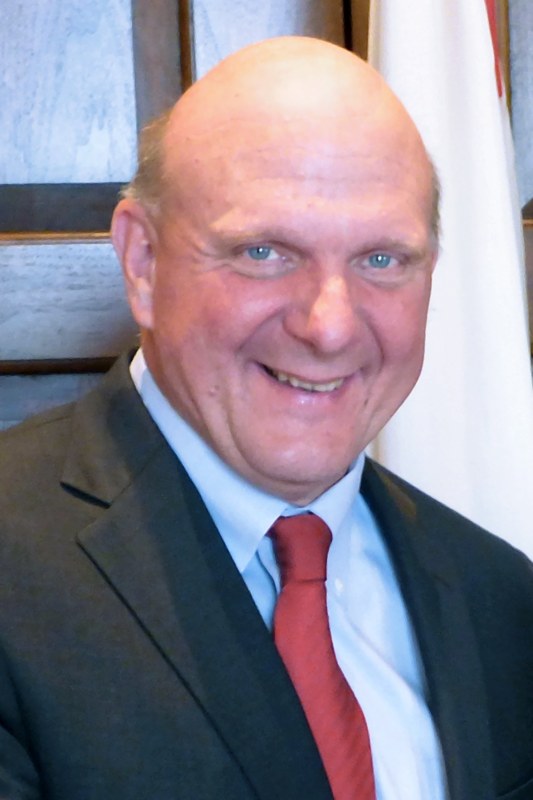
Steve Ballmer, the billionaire former Microsoft chief executive who bought the Los Angeles Clippers in 2014, was suspended for one year from all league and team activities on September 2, 2026, in the harshest punishment the NBA has ever handed an owner. The league acted after a yearlong independent investigation by the law firm Wachtell, Lipton, Rosen & Katz found the franchise had violated salary-cap circumvention rules by funneling endorsement money to star forward Kawhi Leonard through four companies that did business with the team.
Alongside Ballmer’s suspension, the Clippers were fined $30 million and stripped of five first-round draft picks, in what the league described as findings of “a pattern of misconduct and multiple significant rules violations” by a prior offender. The report named Ballmer, president of basketball operations Lawrence Frank and president of business operations Gillian Zucker as the “three individuals most responsible” for the rule-breaking.
Background Information
Ballmer served as Microsoft’s chief executive until 2014; he bought the Clippers for $2 billion in August 2014, after the Donald Sterling scandal ended with Sterling banned for life and forced to sell. His tenure transformed the long-struggling franchise — including the $2 billion Intuit Dome in Inglewood — but it was not free of league discipline: in 2015, barely a year into his ownership, the Clippers were fined $250,000 for violating rules against offering unauthorized business opportunities to players during their courting of free agent DeAndre Jordan, after a presentation improperly included a $200,000-per-year deal with Lexus. In July 2019 the team signed Leonard, the two-time champion and Finals MVP, whose pursuit and retention became the centerpiece of its competitive ambitions.
The Controversy or Incident That Led to Their Cancellation
Allegations. The claims in this section come from an independent investigation conducted by the law firm Wachtell, Lipton, Rosen & Katz at the NBA’s behest, which reported substantiating them and led to league discipline. They were never admitted by Steve Ballmer, never criminally charged, and never adjudicated in court. The Clippers initially called the investigation “heavily biased” and vowed to fight the penalties before Ballmer accepted them on September 13, 2026.
The investigation began on September 3, 2025, when podcaster Pablo Torre reported that Leonard had agreed to a $28 million “no-show” endorsement contract with Aspiration, a since-bankrupt environmental start-up that had been a team sponsor; the league opened its probe the same day. Wachtell’s investigators found that in the months after Leonard signed, his uncle and business manager Dennis Robertson demanded at least $10 million per year in benefits outside the salary cap, directing the demands at Frank, Zucker and Ballmer himself — none of the three reported them to the league as required. The report said the Clippers funneled money to Leonard through endorsement arrangements with Aspiration, Boingo Wireless, Daktronics and Lockton Insurance, inducing the companies “through the prospect of lucrative business arrangements with the Clippers.” Over six days in June 2020, Zucker’s email introductions connected Robertson to Boingo, Daktronics and Lockton; the three deals were worth $18 million, all paid to Leonard by August 2021. The league said Ballmer was suspended for “knowingly seeking to help” Leonard obtain off-court income opportunities, for approving a business deal he knew was a precondition for Aspiration to enter an endorsement contract with Leonard, and for failing “to create conditions under which his organization abided by the NBA’s circumvention rules.”
The report also found the team paid “hundreds of instances” of personal travel, accommodations, gifts and tickets for Robertson and Leonard’s family without properly deducting them from his cap hold.
Public Reaction and Consequences
The penalties announced September 2 — Ballmer’s one-year ban, the $30 million fine, the loss of first-round picks from 2029 through 2033, Frank’s six-month suspension, Zucker’s one-year suspension, Leonard’s $700,000 fine and Robertson’s five-year ban — were described in coverage as the harshest in league history. Commissioner Adam Silver said he was “deeply disappointed by the flagrant violations of our rules and by the Clippers’ institutional and leadership failures that led to this misconduct,” adding that “the severity of the penalties reflects the seriousness of the violations.”
The Clippers responded with a scathing statement: “We vehemently reject the NBA’s findings, which are the result of a heavily biased investigation seeking to justify a predetermined narrative rather than facts and evidence,” adding they would “vigorously challenge these findings and penalties through every avenue available to us.” Leonard, who was not suspended, said he accepted “full responsibility for lapses in judgment by people within my inner circle” while insisting he had “no knowledge of any intent on anyone’s part to circumvent the salary cap.”
Current Status
As of mid-September 2026, the penalties are settled and binding: the NBA and the players’ union agreed the sanctions were final, and Ballmer — after the franchise initially said it “vehemently” rejected the findings — has accepted them. “This has been a very difficult time for everybody associated with the Clippers, and for that, I have sincere regrets,” Ballmer said in a September 13, 2026 statement, adding, “We are committing to put this chapter behind us.” He confirmed the team had communicated its compliance to the league, paid the $30 million fine, and was moving forward. The Clippers and their personnel will operate under a league compliance and monitoring program for five years. The fallout continues to spread beyond the franchise: Daktronics has disclosed that the SEC is seeking information about its Leonard relationship, and a Justice Department probe has also been reported.
Impact on Their Career/Life
The suspension caps the central ambition of Ballmer’s ownership era: after rescuing the franchise from the Sterling disgrace in 2014, he built it into a model of spending and ambition — a new arena, a renovated roster — only to draw what coverage described as the harshest punishment in league history. The report also flatly rejected what it called the “novel theory” Ballmer and the team had pushed publicly — that league rules permit affirmative introductions when players request them — writing that the Clippers offered “no persuasive explanation” for how it comported with the circumvention rules.
The Wachtell findings against him — knowingly helping Leonard seek off-court income, and approving a deal he knew was a precondition for Aspiration’s endorsement — now define the era’s end game. His September apology closed the fight but not the scrutiny: a year away from league and team activities, with a five-year monitoring regime in place, Ballmer’s remaining years as owner will unfold under a scrutiny no level of spending can insulate him from.