Elizabeth Holmes
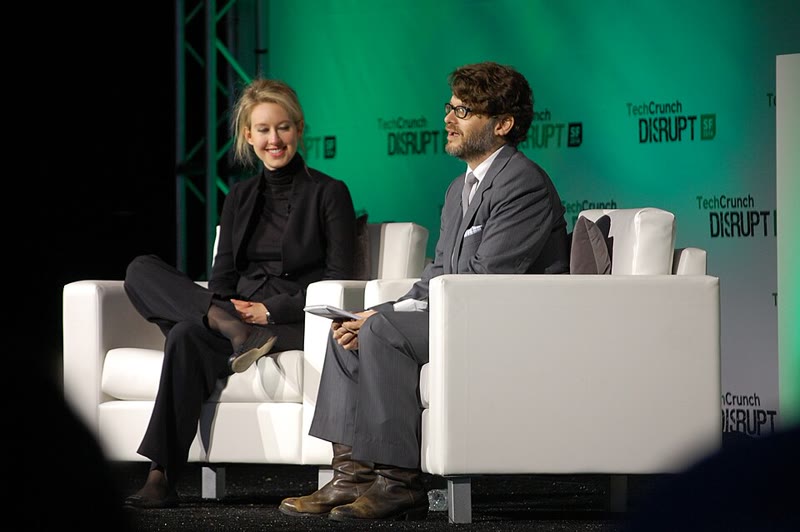
Introduction
Elizabeth Holmes was once hailed as a technology prodigy: a Stanford University dropout who founded Theranos in 2003 at age 19 with a promise to transform blood testing. Her company claimed its device could run many medical tests from a single finger-prick of blood, and Holmes was celebrated as one of the most prominent young female founders in Silicon Valley. That reputation unraveled after investigative reporting exposed serious problems with the company’s technology, and on January 4, 2022, a jury convicted her of defrauding investors. Originally sentenced to more than eleven years in prison — a term later reduced — she became a byword for startup fraud and one of the most widely studied cautionary tales in modern technology history.
Background Information
Holmes founded Theranos in 2003, at age 19, after dropping out of Stanford University. The company promised a revolutionary blood-testing device that could run many tests from a finger-prick of blood, an idea positioned to upend an industry dominated by large laboratories, costly equipment, and long waits for results. A device that was fast, cheap, and accessible to anyone was the kind of ambition that attracted attention well beyond the medical community. The pitch proved enormously appealing: Theranos raised more than $700 million and reached a private valuation of about $9 billion.
During its rise, Holmes was celebrated as one of the most prominent young female founders in Silicon Valley and became a fixture of magazine covers and industry stages. Her story was presented as proof that a young innovator could challenge entrenched industries, and high-profile backers lent the company an aura of credibility. That credibility would later make the company’s downfall all the more striking, as the gap between Theranos’s public image and its actual performance came into view.
The Controversy or Incident That Led to Their Cancellation
Adjudicated vs. alleged. Holmes’s conviction on four investor-fraud counts was upheld through the appeals process and is a matter of court record. She was acquitted of some patient-related counts and the jury deadlocked on others; any conduct connected to those counts remains an unproven allegation.
In 2015, reporting by The Wall Street Journal, led by journalist John Carreyrou, revealed problems with the company’s technology and the accuracy of its tests, and Theranos’s collapse began. Regulators subsequently found that the company’s testing had put patients at risk. Questions about the company’s claims drew scrutiny from federal regulators and business partners alike, and Holmes was charged federally in 2018 with defrauding investors and patients, with her trial running through 2021.
At trial, prosecutors argued that Holmes had known the company’s device did not work as advertised and had nevertheless misled investors, partners, and patients about what it could do. Her defense maintained that she had genuinely believed in the technology and that its failures were the product of ordinary startup struggles. The verdict, delivered on January 4, 2022, was split: Holmes was convicted on four counts of defrauding investors — three counts of wire fraud and one count of conspiracy — while she was acquitted of some patient-related counts and the jury deadlocked on others.
Public Reaction and Consequences
The conviction marked a dramatic reversal for a figure once celebrated as a symbol of a new generation of women in technology. Trial coverage was extensive, and it drew attention to how far Theranos’s public claims had drifted from the reality of its operations and to the risks its testing had posed to patients. On November 18, 2022, Holmes was sentenced to 135 months — 11 years and 3 months — in federal prison, followed by three years of supervised release, and she reported to prison on May 30, 2023.
Her co-defendant and former boyfriend, Ramesh “Sunny” Balwani, Theranos’ chief operating officer, was convicted separately on all 12 counts he faced and was sentenced to nearly 13 years in prison. Holmes and Balwani were also ordered to pay roughly $452 million in restitution to victims of the fraud. The saga also became a cultural touchstone: it was documented in the book “Bad Blood” and dramatized in a 2022 television series, which Holmes did not produce. For many observers, the case came to define the excesses of an era in which investors rewarded bold promises built on fragile foundations.
Current Status
Holmes remains incarcerated at Federal Prison Camp Bryan, a minimum-security facility for women in Bryan, Texas, where she has been held since May 2023. Her legal appeals ultimately failed: the Ninth Circuit rejected her challenge, leaving the conviction and core sentence intact. In March 2026, the same trial judge reduced her sentence by one year — from 135 months to 123 months — under updated federal sentencing guidelines that offer relief for certain first-time, non-violent offenders, and accumulated good-conduct credits have further shortened her projected time served; her expected release date is now December 30, 2031.
Separately, Holmes has asked President Donald Trump to commute her sentence. That clemency petition remains listed as pending, with no public decision announced. According to recent reporting, she has maintained a clean disciplinary record and has participated in prison programs while the petition sits unresolved.
Impact on Their Career/Life
The case destroyed Holmes’s reputation and her standing in the business world. Once feted as a visionary founder, she is now remembered as the central figure in one of the most notorious startup frauds in recent history, and her name has become shorthand for the dangers of hype in the technology industry.
The collapse also had broader effects: it intensified scrutiny of startup culture and of investors’ willingness to back charismatic founders on thin evidence, and it prompted fresh questions about how blood-testing and medical devices are regulated. For Holmes personally, the trajectory from celebrated prodigy to convicted felon serving a decade-level sentence marked one of the steepest falls in modern Silicon Valley history.
In September 2026, a documentary about Holmes, “You Can See Everything,” co-directed by Nathan Fielder and Lance Oppenheim, premiered as a surprise Telluride screening, with A24 planning an October theatrical release; the film draws on access Holmes granted a crew in the thirty-four days before she reported to prison. Holmes has also resurfaced online through an X account that describes its posts as “mostly my words, posted by others,” and which shared the film’s trailer with the caption “I’m always being real.” The account drew fresh fury in September 2026 — “Why are you even able to post from prison?” — and the Post noted inmates are barred from social media and that who runs it “remains unclear.” She still denies the crimes: “I refused to plead guilty to crimes I did not commit.”