Christian Emmanuel Sanon
Introduction
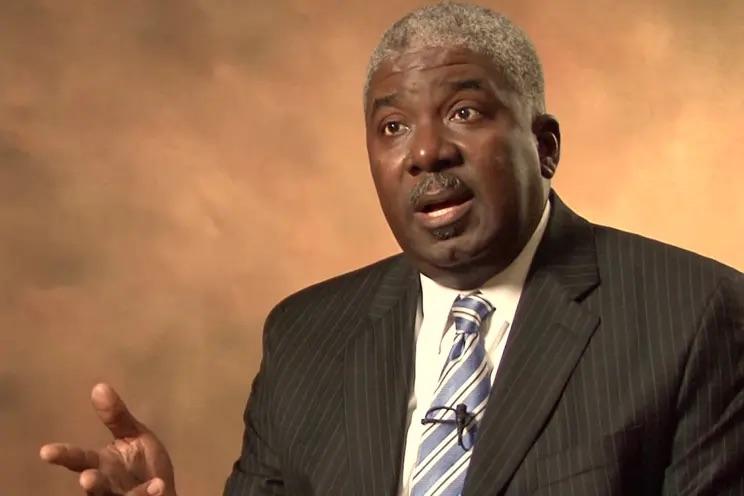
Christian Emmanuel Sanon is a Haitian-American pastor and self-styled physician from South Florida whom a federal jury in Miami convicted on November 19, 2026, for his role in the July 7, 2021, assassination of Haitian President Jovenel Moïse — a killing prosecutors say Sanon helped orchestrate so that he could take over the country’s leadership. The verdict made the 67-year-old the fifth defendant convicted in US federal court for the plot, in a case that has already produced five life sentences for earlier defendants. The jury found Sanon guilty of conspiracy to provide material support resulting in death, providing material support resulting in death, conspiracy to kill and kidnap a person outside the United States, two counts of conspiracy to commit offenses against the United States, expedition against a friendly nation, smuggling goods from the United States, and submitting false or misleading export information — eight counts in all, carrying a maximum penalty of life in federal prison.
Background Information
Sanon was born in southern Haiti and studied medicine in the Dominican Republic before moving to Florida, where he lived intermittently starting in the 2000s. Court and public records tie him to Broward County, Hillsborough County and Boynton Beach, plus a stay in Kansas City, Missouri, and a 2013 bankruptcy filing that listed his occupation as “physician/director” of a foundation based in Haiti and the Dominican Republic; ABC News reported it could not verify that he held a medical license. In online videos, including one titled “Leadership for Haiti,” he denounced Haiti’s leaders as corrupt — “they don’t care about the country, they don’t care about the people,” he said — claimed the country’s uranium, oil and gold were being plundered, and promoted himself as a potential president who could bring change.
The Controversy or Incident That Led to Their Cancellation
Convicted on all counts. A federal jury in Miami convicted Sanon on November 19, 2026, of all eight charges, including conspiracies classified as resulting in death; he faces up to life in prison at a sentencing hearing that has not yet been scheduled. The account of the plot below comes from trial evidence and court records as summarized by prosecutors.
Moïse was shot dead in his bedroom near Port-au-Prince before dawn on July 7, 2021, when about two dozen foreign mercenaries, mostly Colombian, stormed his home and wounded his wife. Four days later, Haitian National Police chief Léon Charles announced Sanon’s arrest, saying the alleged killers had been protecting Sanon as their intended president and that a search of his home had turned up a hat with the DEA logo, 20 boxes of bullets, gun parts, Dominican license plates and correspondence with unidentified people.
At trial, prosecutors laid out the conspiracy in Sanon’s own movements: according to court records and evidence presented, he kickstarted the plot in early 2021, working with co-conspirators Arcangel Pretel Ortiz, Antonio Intriago, Walter Veintemilla and James Solages in the United States and Haiti, promising lucrative future government infrastructure contracts in exchange for financial, logistical and operational support in kidnapping or killing Moïse. He falsely claimed to have the backing of the US State Department to recruit allies, often using American flags and other government imagery to lend credibility. When the plan to install him stalled, he took a secondary role in the planned government and arranged transportation, lodging, food, equipment and other supplies for the 22 Colombian mercenaries who carried out the killing; in mid-June 2021 he helped smuggle ballistic vests from the United States to Haiti for them, and in late June he sent Solages — described as his right-hand man — back to the US to obtain tactical advice and finalize the assassination plans.
Digital evidence presented at trial showed months of extensive communications between Sanon and his co-conspirators detailing plans to kidnap or kill Moïse — and that shortly before his July 9, 2021, arrest, Sanon deleted most of the incriminating communications from his three cellphones, including messages discussing what he expected to gain from the plot immediately after the assassination.
Public Reaction and Consequences
Federal officials framed the verdict as a milestone in the years-long pursuit of the plot’s architects. “Sanon helped orchestrate one of the most brazen acts of political violence in the Western Hemisphere in recent history,” said M. Scott Proctor, Acting Principal Deputy Assistant Attorney General for National Security. Acting US Attorney Yara Lorenzo Klukas for the Southern District of Florida said the assassination of a sitting president “is an attack not only on a life, but on the sovereignty of a nation and the very foundations of democracy,” and that “those who seek power through violence and political assassination will find no safe haven in the United States.”
The conviction extends a wider accounting: eight co-conspirators, including two Colombian mercenaries and several Haitian and American associates, have pleaded guilty; in May 2026 a federal jury convicted Pretel Ortiz, Intriago, Veintemilla and Solages; and in September 2026 29 additional defendants were indicted, in charges that include an intertwined fraud and money-laundering scheme involving Paycheck Protection Program funds allegedly used to help finance the plot. In Haiti, the assassination accelerated a security crisis that has let armed gangs seize control of much of the country.
Current Status
Sanon was convicted on all counts on November 19, 2026, and awaits sentencing in Miami federal court, where a judge will determine his term under the Sentencing Guidelines; the maximum penalty is life in federal prison. He has been in custody since Haitian police arrested him days after the assassination, and was transferred to the United States in early 2023; his case is docketed as 22-cr-20104 in the Southern District of Florida, prosecuted by Assistant US Attorneys Sean T. McLaughlin, Jason Wu and Altanese Phenelus.
Impact on Their Career/Life
Sanon went from part-time Florida preacher and self-promotional YouTube videos about leading Haiti to a convicted participant in an international assassination case, after more than five years in prison awaiting trial. The killing he took part in left Haiti without an elected president, deepened its gang-driven collapse, and still shadows its planned December 2026 presidential election — the first in a decade. The jury’s verdict converts the ambition he advertised in his own videos — “With me in power,” he once said, “you are going to have to tell me: ‘What are you going to do with my uranium?’” — into a criminal record that now awaits a possible life sentence.
Sources
- U.S. Attorney’s Office, Southern District of Florida, “Federal Jury Convicts Fifth Defendant for Scheme to Assassinate Haitian President Jovenel Moïse in Homeland Security Task Force Investigation,” November 19, 2026. source
- *NY Post (Reuters), “Florida pastor pleads not guilty to Haitian president’s assasination ahead of trial”, 28 September 2026 — source
- *Associated Press via WSVN 7News, “What to know as trials over the assassination of Haiti’s president resume in Miami”, 27 September 2026 — source
- *Associated Press via Christian Century, “Haitian pastor arrested for role in assassination”, July 2021 — source
- *ABC News (digital.abcaudio.com), “Haitian-born Florida resident arrested as latest suspect in president’s assassination”, July 2021 — source