Lil Durk
Introduction
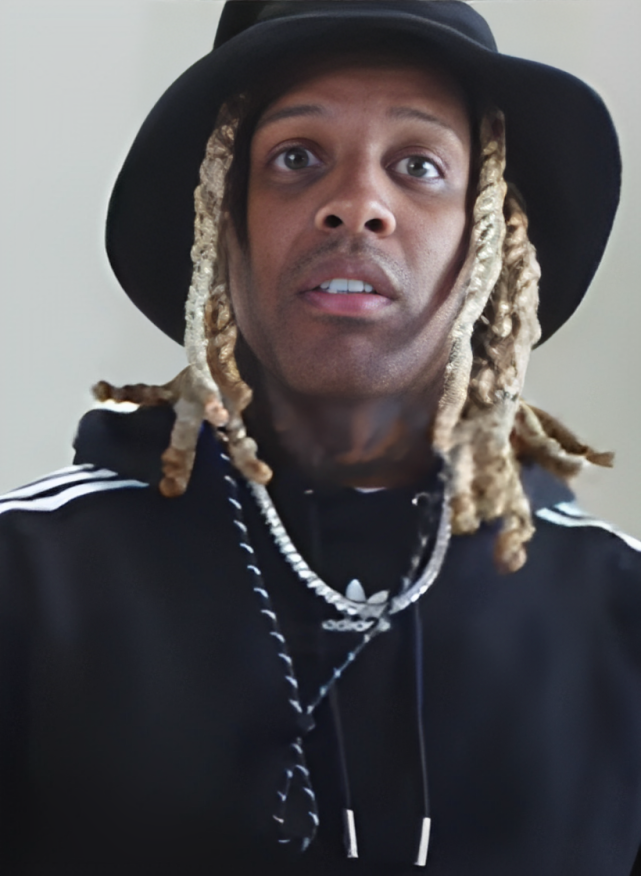
Lil Durk, born Durk Devontay Banks, is a Grammy-winning rapper from Chicago’s Englewood neighborhood and the founder of the Only the Family (OTF) collective and record label. In October 2024, he was arrested by federal authorities on a conspiracy charge alleging he orchestrated a murder-for-hire plot targeting rapper Quando Rondo — a shooting that killed an innocent bystander — and he remained in federal custody without bail as the case moved toward a 2026 trial. In September 2026, a federal jury acquitted him on all counts in that murder-for-hire case, though he remains in custody facing a separate racketeering trial.
Background Information
Born on October 19, 1992, Banks rose from Chicago’s underground mixtape scene — his Signed to the Streets series (2013-2014) led to a signing with Def Jam Recordings, which released his first two studio albums. After going independent in 2018, he found escalating mainstream success: The Voice of the Heroes, his 2021 collaborative album with Lil Baby, became his first album to debut at number one on the Billboard 200, a feat his 2022 album 7220 repeated. In February 2024, he won his first Grammy Award, for Best Melodic Rap Performance as lead artist on “All My Life” featuring J. Cole, from the top-three album Almost Healed — the biggest commercial success of his career. He founded OTF in 2010; the collective included his childhood friend King Von, the rapper Dayvon Bennett, who was signed to OTF and shot dead outside an Atlanta club on November 6, 2020.
The Controversy or Incident That Led to Their Cancellation
Adjudicated vs. alleged. Banks’s co-defendants’ convictions for stalking Robinson’s death are a matter of court record. Banks himself was acquitted on all counts of the murder-for-hire case by a federal jury on September 11, 2026; any conduct connected to those counts is therefore not an adjudicated fact. He still faces separate, untried racketeering charges, and conduct described below as alleged remains unproven as to him personally.
The federal case centered on the August 2022 shooting outside a gas station near the Beverly Center mall in Los Angeles. Prosecutors alleged that after King Von’s killing — for which Quando Rondo (born Tyquian Terrel Bowman) was present in the altercation that preceded it — Banks made clear “in coded language” that he would pay a bounty to anyone who took part in killing Bowman in retaliation. According to the indictment, Banks and five co-defendants traveled from Chicago to Los Angeles in August 2022, and the co-defendants “used two vehicles and worked in tandem to track, stalk, and attempt to murder [Bowman] for hours.” The gunmen — allegedly armed with multiple weapons including a machine gun — fired at least 18 rounds at Bowman’s vehicle, striking and killing his cousin, Saviay’a Robinson, who was traveling with him. Bowman survived.
At trial, prosecutors built their case largely on cooperating associates. Assistant US Attorney Ian Yanniello argued in closing that Banks “had his shooters on speed dial,” adding that “no one is saying he was the one on the ground with a gun in his hand in Los Angeles, but you know this story doesn’t happen without him.” Cooperating witnesses Kacey “OTF Jam” Hester and Keith Jones — who admitted involvement in the shooting — and former personal assistant Kavon Grant testified for the government; Steel derided them as “snitches, cooperators, rats” seeking to escape life sentences and argued Grant was the actual architect of the shooting. Judge Michael W. Fitzgerald also admitted some of Banks’s lyrics as evidence — a contested tactic critics say penalizes rap artists.
Banks was arrested in October 2024 near a Miami airport as he was about to board a private jet bound for Italy, after prosecutors said flight records showed he had also been booked on a one-way international itinerary as co-defendants were arrested in Chicago. A November 2024 superseding indictment added charges of use of interstate facilities to commit murder-for-hire resulting in death, and discharging firearms — including a machine gun — resulting in death; he was extradited to Los Angeles and pleaded not guilty. He could have faced life in prison if convicted; prosecutors did not seek the death penalty.
Public Reaction and Consequences
The case has profoundly damaged Banks’s public standing and career. The village of Broadview, Illinois, announced its dissociation from Banks and his Neighborhood Heroes foundation and rescinded the key to the city he had been awarded weeks earlier. His ninth album, Deep Thoughts, was released in March 2025 while he was incarcerated, and peaked at number three on the Billboard 200. His legal team has forcefully contested the prosecution: in June 2026, after prosecutors added racketeering and murder-in-aid-of-racketeering counts two months before trial, lawyers Drew Findling, Marissa Goldberg, Brian Steel, and Christy O’Connor said in a statement that “Durk Banks is innocent, no matter how many indictments they want to throw at him,” calling the new indictment “lipstick on a pig” and “a pathetic pivot” recycling old accusations. The verdict in the murder-for-hire case vindicated the defense’s stance, and celebrity supporters celebrated: Kanye West, who attended the trial, declared on X, “Lil Durk is not guilty on ALL COUNTS,” while federal prosecutors expressed disappointment and pointed to the co-defendants’ convictions.
Current Status
On September 11, 2026, a federal jury in Los Angeles acquitted Banks on all counts in the murder-for-hire case — conspiracy, stalking resulting in death, and murder for hire — following roughly three days of deliberations. He remains in federal custody, however, pending a second trial on the separated racketeering counts. His two co-defendants who went to trial alongside him, Deandre Wilson and David Lindsey, were found guilty of conspiracy to commit stalking, stalking using a dangerous weapon, and stalking resulting in death, though the same jury acquitted both of murder for hire; First Assistant US Attorney Bill Essayli called the verdicts justice for Robinson’s family and promised to “present our evidence at his second trial.”
Impact on Their Career/Life
At the time of his arrest, Banks was at the peak of his commercial standing: a fresh Grammy winner whose albums routinely debuted at or near the top of the Billboard 200. The federal case froze his career outright — no touring, no promotion, and an album rollout conducted from a detention center. Civic honors were withdrawn, his charitable foundation was cut loose by its hometown partners, and the OTF collective he founded is described in court filings as an alleged criminal enterprise — an allegation his lawyers reject as a weak, recycled case. With the murder-for-hire case now ended in acquittal and only the untried racketeering counts standing between him and release, the second trial will define the final chapter of one of drill music’s most consequential careers.