Abdul El-Sayed
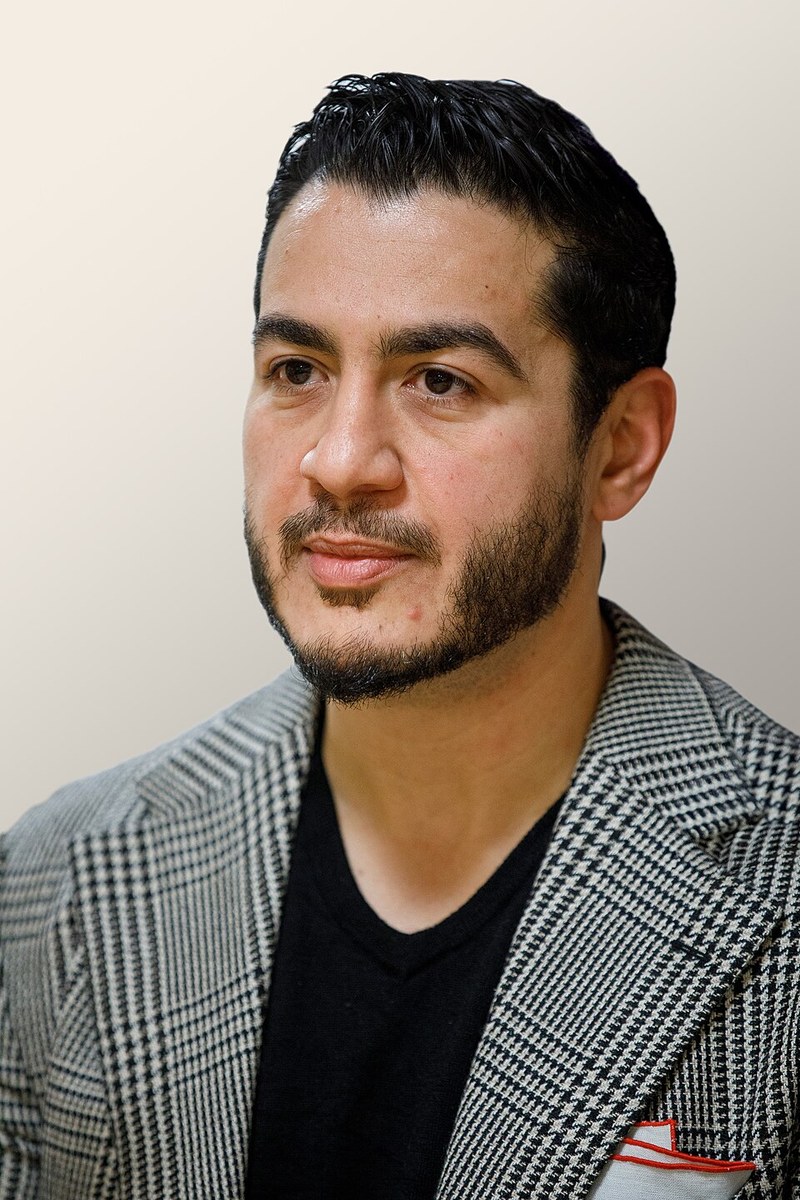
Introduction
Abdul El-Sayed, the Democratic senator-elect from Michigan who defeated Republican Mike Rogers in the November 3, 2026 general election, was pressed on NBC’s “Meet the Press” on Sunday, October 11, 2026, to “set the record straight” on whether he or his family had any ties to the Muslim Brotherhood — and answered “No” twice, adding that the accusations were Islamophobic attacks floated by his Republican opponent, former congressman Mike Rogers. Within a day, social-media posts by his own half-sister describing their mother’s Muslim Brotherhood activism and the family’s long membership in the group had resurfaced, first reported by the Washington Free Beacon and amplified by Fox News and the NY Post as a direct contradiction of his televised denial. Since then the fight has escalated into the race’s defining controversy: the Free Beacon’s follow-up report that El-Sayed himself signed a 2012 letter urging Egypt’s Brotherhood-aligned president to “purge the media and the police,” President Trump declaring him “100 percent” affiliated with the group, millions of dollars in Republican attack ads, and a second debate stage devoted almost entirely to the question — all of it denied by El-Sayed, who says he “clearly” disavows the Brotherhood and calls the attacks Islamophobic. The newest development came after the vote: the NY Post reported that his Wikipedia page had been quietly whitewashed of its controversies over the preceding months by an anonymous editor, according to researchers who tracked the revisions. Since the vote the scrutiny has broadened onto El-Sayed’s own record: the NY Post reported on November 8 that resurfaced 2011-2012 essays show him blasting a US drone strike that killed an American al-Qaeda leader as an “extrajudicial assassination” and co-authoring a 2012 Al Jazeera analysis a commentator billed as praising the Brotherhood’s electoral success, while a viral Election-Day confrontation with a Sky News reporter drew accusations that he mistreats journalists.
Background Information
El-Sayed, born October 31, 1984, in Rochester Hills, Michigan, to Egyptian immigrant parents, is an epidemiologist and Rhodes Scholar who earned a doctorate at Oxford and a medical degree at Columbia, led the Detroit Health Department from 2015 to 2017, and directed Wayne County’s health and veterans services department from 2023 to 2025. He defeated Representative Haley Stevens in the Democratic primary and won the November 3, 2026 general election against Mike Rogers, becoming the first Muslim member of the U.S. Senate. His mother, Fatten El-Komy, is a nurse practitioner in Missouri; he was raised in the Detroit area by his father and stepmother. His half-sister, Eman Abdelhadi, is a professor at the University of Chicago.
The Controversy or Incident That Led to Their Cancellation
Contested political allegations. Nothing here has been adjudicated anywhere, and no formal consequence of any kind has followed. The family-ties accusations originate with El-Sayed’s Republican opponent and opposition research; El-Sayed flatly denies them and calls the attacks Islamophobic, and his campaign says independent fact-checkers have “repeatedly debunked” them. What is newly documented is an artifact bearing his own name: a 2012 letter whose published signature list includes “Dr. Abdul Rahman El-Sayed” — an identification the Free Beacon attributes to unnamed sources familiar with Arabic-language media, and which El-Sayed has answered only by disavowing the Brotherhood outright. What that signature means is the fight; one listed co-signer already told the Beacon he never signed.
Rogers first raised the claims during the candidates’ first debate, asserting per Jewish Insider’s account that El-Sayed had received donations from groups supporting the Muslim Brotherhood and from individuals who “openly support Hamas, Hezbollah [and] al-Qaida,” that El-Sayed’s mother had worked for the Islamic American Relief Agency — which the outlet notes was designated a terrorist organization for supporting al-Qaida — and that El-Sayed’s sister-in-law had sued to be removed from a federal terrorism watchlist. When moderator Kristen Welker asked El-Sayed on October 11 whether he could “set the record straight,” he replied “No,” repeated it when she followed up — “No, you don’t have any ties, and your family doesn’t?” — and accused Rogers of floating Islamophobic attacks “because he really wanted to repeat the word Muslim.”
The resurfaced posts cut against the categorical denial. In a 2012 post, Eman Abdelhadi wrote of their mother: “Had an amazing talk with my mom about her activism in the Muslim Brotherhood during the early 70s while she was in college #respect.” In another 2012 post she wrote, “My family has long been MB, but I’ve always felt that it has navigated the political sphere poorly/destructively,” and in a 2013 post, “Praying for all my family that supports the #MB in #Egypt. Lie low, stay safe.” An El-Sayed campaign spokesperson responded to Fox: “Abdul is a dad and a doctor. He has spent his entire career working to keep Michiganders healthy and safe. Independent fact checkers have repeatedly debunked Mike’s lies, but their campaign continues to use bad faith attacks on Abdul’s faith and family.”
The letter is the newest and most personal piece. On November 25, 2012 — days after Egypt’s newly elected president, Mohamed Morsi, a longtime Brotherhood leader, decreed sweeping powers for himself — the Egyptian news portal Al-Ahram Gate published a statement signed by 46 “leaders of the Egyptian community” in the United States under the headline “Statement by Morsi Supporters in America Backs His Decisions and Calls on Him to ‘Purge the Media and Police.’” “We, leaders of the Egyptian community, support the revolutionary decisions taken by the president, and we call on him to purge the media and the police as quickly as possible,” it read, per the Free Beacon’s translation; the 33rd signature, the outlet reported, was “Dr. Abdul Rahman El-Sayed” of New York — then a Columbia medical student — an identification it says sources familiar with Arabic-language media confirmed. In the months that followed, at least six Egyptian journalists were hauled into court on “insulting Islam” and “insulting the president” charges, per the Committee to Protect Journalists as cited by the Free Beacon, and Morsi’s government collapsed in a 2013 military coup.
The Beacon says it first reported the letter in September 2026, after Laura Loomer flagged its existence that April; El-Sayed’s campaign did not respond to the outlet’s questions about it, the Beacon writes that he has never addressed why he signed, and the NY Post — contacting the campaign again this week — reports only that he “now insists he disavows the Muslim Brotherhood.” The document’s reliability is contested even among its own signers: Dr. Khaled Elsayes, whose name appears on the letter, told the Free Beacon he did not sign it and suggested Morsi supporters padded the list with the names of prominent Egyptian expats. The letter was not El-Sayed’s only public comment on Egyptian politics: in a January 2011 HuffPost essay he argued a Brotherhood-led Egypt would “look nothing like Iran” and urged Americans not to fear the group.
The resurfaced essays widen the record beyond the letter. In a December 9, 2011 HuffPost piece, “Guns or Butter? Decisions After the Failure of the Super Committee,” El-Sayed - then a Columbia University epidemiology professor - complained lawmakers seemed more intent on shielding the Pentagon budget than social programs while “our military carries out daily drone strikes in Pakistan and Yemen,” and wrote: “Most recently, in fact, one of these drone strikes perpetrated the extrajudicial assassination of an American citizen. Soon after, another was ordered to murder his son, 16, also an American.” The piece referred to Anwar al-Awlaki, the dual US-Yemeni citizen and key al-Qaeda organizer killed in a 2011 Obama-authorized drone strike - the first US citizen deliberately killed by a US drone strike - with El-Sayed’s “soon after” line pointing at the strike later ordered against al-Awlaki’s 16-year-old son. The Washington Free Beacon’s morning newsletter, citing reporter Jon Levine, reads the same piece as part of a pattern in which El-Sayed has been “squeamish about bringing justice to radical Islamists”: in an August 5, 2022 New Republic essay he wrote it was “troubling to watch yet another American president flog ‘War on Terror’ themes” when a strike killed 9/11 mastermind Ayman al-Zawahiri, called that strike “a fig leaf” to cover the Afghanistan withdrawal, and after the 2020 strike that killed Iranian general Qassem Soleimani warned that “one shouldn’t kick a rabid dog.” In February 2012 he co-authored an Al Jazeera analysis with Harvard economics doctoral student Jisung Park that commentator Eitan Fischberger, who unearthed it, billed as apparently unreported and as praising the Muslim Brotherhood’s electoral success “in remarkably flattering terms” - the excerpt itself attributes the Islamist parties’ parliamentary showing “more a product of their domestic platforms and their histories of social justice than voter resonance with Islamic ideologies,” while warning Egypt’s ruling coalition to “resist the temptation” to nationalize industries or raise tariff barriers and comparing North and South Korea’s paths. Fischberger also resurfaced a 2011 Guardian piece in which El-Sayed urged President Obama to back Egypt’s protesters: “As an American, I ask you to support these freedom fighters,” he wrote, adding, “As an Egyptian… I know, firsthand, the injustice that the Mubarak regime has inflicted.”
After the election, the record of the controversies themselves became part of the story. According to the NY Post, social-media sleuths tracked months of whitewashing edits to El-Sayed’s Wikipedia page by an anonymous editor using the handle “CopyleftEverything” — also prolific on the Party for Socialism and Liberation, American Communist Party and Revolutionary Communists of America pages — heading into the November 3 vote. The documented edits include a June 12 change that softened “has never been granted a medical license” to “did not pursue a medical license” (El-Sayed, who holds a Columbia medical degree but never entered residency training, drew campaign criticism for styling himself “doctor”), an October 10 softening of the description of left-wing streamer Hasan Piker — who once said “America deserved” the September 11 attacks — from “a controversial left-wing Twitch … streamer” to plain “left-wing political commentator” in a sentence noting Piker appeared with El-Sayed at two primary-night parties, and the deletion of paragraphs on October 12 and October 31 noting he had hired a Jewish community liaison officer amid tensions with Michigan’s Jewish community over his criticism of the Israeli government and his statements about the March 12 Temple Israel vehicle-ramming attack. The revisions were tracked separately by investigative journalist Ashley Rindsberg, founder of the online-campaign-influence tracker NPOV, and New York researcher Yehuda Teitelbaum, who posted them on X the week after the vote; Wikipedia co-founder Larry Sanger called the findings “old-fashioned journalism” and “both appropriate and effective as a criticism of Wikipedia and how it works today,” and Teitelbaum told the Post, “This is just not a random event to correct the public record… This was really an organized effort to change the narrative in this country and to portray narratives and certain ideas that are not honest.” The Post attributes the edits to the anonymous editor and reports no connection between the editor and El-Sayed or his campaign; El-Sayed had apologized during the campaign for his “hurt people hurt people” remark about the Temple Israel attack, which he said was meant to note the attacker’s relatives were killed in an Israeli airstrike on Lebanon.
Separately, his handling of press questions became its own storyline. Fox News Digital catalogued a pattern of heated exchanges the week after the election: the viral Election Day confrontation with Sky News correspondent James Matthews - El-Sayed asked him “Are you registered to vote in the state of Michigan?” before dismissing him (“Why would I care to have a conversation with you?”), put his hands on the reporter’s shoulders twice, sneered that “like five people” watch Sky News in the US and told him, “If you keep being in my way, I’m not going to be very happy”; a sarcasm-laced brush-off of a reporter asking about Haley Stevens (“Ask me a serious question”); testy replies to NBC anchor Tom Llamas over the Brotherhood allegations (“hearsay evidence from a tweet… Are you insinuating that somehow I was lying?”); a refusal to discuss leaked audio - in which, per the Free Beacon, he said “there are a lot of people in Dearborn who are sad today” after a joint US-Israeli operation killed Iran’s supreme leader - that he called a “dog and pony show” in an exchange with Free Press reporter Audrey Fahlberg, who said he “appeared to become furious whenever asked about the Iranian regime”; repeated interruptions of Fox’s Bret Baier; and a Chuck Todd interview in which he said of Bill Maher, “I wanna give people the image of watching him get his a– whooped on his own show by a guy who prays like I do.” The viral Matthews moment drew criticism from Piers Morgan (“pathetic” and “very patronizing”), former Israeli spokesperson Eylon Levy (“a bully”) and Students for Trump founder Ryan Fournier (“unhinged”), while communications trainer Jocelin Martinez told Fox the style “got him elected in Michigan because the moment requires leadership with gumption”; the campaign did not immediately respond to a request for comment.
Public Reaction and Consequences
Coverage framed the denial and the posts as irreconcilable: Fox News’ congressional correspondent Bill Melugin covered the “alleged family ties” and the campaign’s denials on “Special Report,” and Fox’s report was syndicated by the NY Post under a headline stating the ties had “surfaced after denying any link.” In the same “Meet the Press” interview El-Sayed also expressed regret over his comments after the terror attack at Temple Israel earlier in 2026 — remarks critics said attempted to justify the perpetrator — telling Welker, “I regret anytime… if I step on somebody’s grief.”
The story reached a second national stage on October 21, when the campaign’s Wednesday-night debate turned on the letter: Rogers mocked that El-Sayed, “passionate about defunding the police,” had “asked the Muslim Brotherhood, excuse me, head Morsi in Egypt, to defund the police there, too,” and demanded, “Are you for America or are you for these terrorist groups overseas?” — the Post’s account adds he chided El-Sayed for having been “bought off” by the group. El-Sayed called the question “shameful”: “To bring into question my commitment to the Constitution is really beneath you… I’m proud of our Constitution that guarantees all of us the right to pray as we choose to pray,” adding that the tie his critics cite is “my mom, who’s a nurse in Missouri.” Outside the debate, Senator Ted Cruz told Fox’s Sean Hannity that an El-Sayed victory would endanger US intelligence assets, the NRSC said he has “serious questions to answer,” Trump has declared him “100 percent” affiliated with the Brotherhood, and two Republican super PACs are reportedly spending millions on ads that cut his “Meet the Press” denial against his half-sister’s posts — a barrage one GOP strategist told The Hill has “made the race turn.”
The coverage is not one-sided. Fox News’ own debate report states plainly that “there is no evidence to suggest that El-Sayed has any affiliation with the Muslim Brotherhood,” and the political scientists quoted by The Hill read the barrage as an effort to play on voter unease about electing the first Muslim U.S. senator — Rutgers’ Ross Baker: “The name, Muslim Brotherhood, suggests something sinister, and I think that’s probably why they’re using it.” The controversy has already cost one job around the campaign: field organizer Abdoul Beckwith was fired after an undercover video recorded him claiming El-Sayed takes overseas donations and could not reject Hamas or the Brotherhood without “losing the people that brought him up” — claims the campaign calls categorically false (he is also profiled on this site).
The post-election amplification runs on both tracks. Breitbart reported on November 4 - citing Fischberger - that Abdel Mawgoud al-Dardiri, a former foreign-affairs spokesman for the Muslim Brotherhood’s Freedom and Justice Party who now teaches in Minnesota and donated $500 to El-Sayed’s campaign in June, hailed the victory as a “model” for Muslims advancing their cause “from within the political system” and as a win for the “Islamic world,” and that Ikhwan Online, a Brotherhood-tied publication, had cast El-Sayed’s August primary win as a blow to what it called the “Zionist occupation.” The counter-record persists too: Breitbart notes Bridge Michigan found no evidence El-Sayed has Brotherhood ties or pledged it support and reported that he did not sign the 2012 Morsi letter, and El-Sayed himself has told Fox News, “I have never been a member of the Muslim Brotherhood, I never will be a member of the Muslim Brotherhood.”
Current Status
As of November 9, 2026, El-Sayed has won the November 3 general election against Rogers and is Michigan’s senator-elect — the first Muslim member of the U.S. Senate — but no formal consequence of any kind has followed from the Brotherhood dispute or the 2012 letter, there is no legal proceeding, and the dispute remains political and contested. He continues to disavow the Brotherhood — “I clearly disavow. If it’s not clear enough, I clearly disavow it” — while rejecting the dual-loyalty implication as baseless; his campaign did not respond to The Hill’s or the Post’s requests for comment on the letter. The newest open question is the whitewash of his Wikipedia page: the Post attributes the edits to an anonymous editor, reports no connection to El-Sayed or his campaign, and the editor’s identity remains unknown. What would change the picture: any direct El-Sayed accounting for the 2012 signature, identification of the whitewash editor with any tie to his campaign, or a Senate consequence from either dispute — none of which has occurred. The November 8 trove of resurfaced essays is the newest open item, and the NY Post reports his posture toward it is unchanged: he “now insists he disavows the Muslim Brotherhood and has mocked the scrutiny,” joking during a Crooked Con appearance late last week, “I have a brother. He’s Muslim. He and I have a Muslim brotherhood.”
Impact on Their Career/Life
The episode converts a routine opposition-research fight into a credibility benchmark: El-Sayed answered “No” without qualification on a national broadcast, so any future substantiation of even a narrow family connection now reads as a documented contradiction rather than an ambiguity — the dynamic his critics are openly pressing and his campaign calls bad-faith attacks on his faith. The letter sharpens that dynamic: unlike family posts, it bears his own name, which is why Republicans from Trump to Cruz have converted it into attack ads and a debate line — while his own counter-frame, that asking a Muslim candidate the question at all is “shameful,” has become his closing answer on every stage. In a race where he would be the first Muslim U.S. senator, the fight also forces every remaining campaign week to be fought partly on his family’s religious history rather than his platform, a terrain his own counter-framing acknowledges. The whitewash reporting adds a new dimension now that the race is won: the researcher who tracked the edits told the Post the revisions matter because Google and AI search systems rely heavily on Wikipedia being objective and correct, meaning the contested record follows El-Sayed into the Senate through the platforms that mediate it. The resurfaced 2011-2012 essays and the press-confrontation file extend that dynamic past election day: critics now work from El-Sayed’s own published record rather than a disputed signature - the “extrajudicial assassination” line, the “fig leaf” essay, the “rabid dog” warning - while his combative answers to the questions those writings raise became a viral post-election storyline of its own.
Sources
- NY Post, “El-Sayed blasted killing of Al-Qaeda terrorist US citizen in resurfaced article,” Nov 8, 2026 - source
- X post, “Eitan Fischberger on the unearthed 2012 Al Jazeera article,” Nov 7, 2026 - source
- Fox News, “Abdul El-Sayed’s pattern of hostile exchanges with reporters draws scrutiny after viral moment,” Nov 2026 - source
- Breitbart, “Muslim Brotherhood Figure Hails El-Sayed Senate Win as ‘Model’,” Nov 4, 2026 - source
- The Morning Beacon (Washington Free Beacon), “Abdul El-Sayed Criticized US Drone Killing of 9/11 Mastermind as ‘Troubling’ and ‘a Fig Leaf’,” Oct 28, 2026 - source
- HuffPost, “Guns or Butter? Decisions After the Failure of the Super Committee,” Dec 9, 2011 - source
- NY Post, “Michigan Sen.-elect Abdul El-Sayed’s Wikipedia page was whitewashed of controversies before election: sources,” Nov 7, 2026 — source
- Fox News, “Abdul El-Sayed’s alleged family ties to Muslim Brotherhood surface after denying any link during NBC interview,” Oct 13, 2026 — source
- NY Post, “Abdul El-Sayed’s alleged family ties to Muslim Brotherhood surface after denying any link during NBC interview,” Oct 13, 2026 — source
- Washington Free Beacon, “Abdul El-Sayed Called on Egypt’s Muslim Brotherhood To ‘Purge the Media and Police’…,” Sep 2026 — source
- Washington Free Beacon, “El-Sayed’s Fellow Muslim Brotherhood Supporters… Have Poured Thousands Into His Campaign,” Oct 2026 — source
- NY Post, “Abdul El-Sayed under fire for once signing letter urging Egypt’s Muslim Brotherhood to ‘purge media and police’,” Oct 22, 2026 — source
- Fox News, “El-Sayed erupts at GOP rival over Muslim Brotherhood accusations in fiery Senate debate,” Oct 2026 — source
- The Hill, “Republicans target Abdul El-Sayed with Muslim Brotherhood allegations,” Oct 22, 2026 — source
- Jewish Insider, “El-Sayed denies Muslim Brotherhood ties after Rogers debate claim,” Oct 2026 — source
- Wikipedia, “Abdul El-Sayed” — source